Janet Yellen: The Economist Who Changed Financial History

Contents · 6 sections
“Listening to others, especially those you disagree with, tests your own ideas and beliefs. It forces you to recognize that you don’t have a monopoly on the truth.”
Janet Yellen
Janet Yellen, one of the most prominent figures in economics, built an impressive career that continues to inspire millions. Her path from academia to the top of American economic policy is a story of vision, consistency and deep financial expertise. How does a woman break into a largely male world and leave a lasting mark on her country’s economic policy?
This article traces Janet Yellen’s life and career: the key stages of her professional rise, fascinating facts about her decisions and what they mean for today’s economy.
Today, Janet Yellen’s name stands for innovation, resilience and the ability to make big decisions in hard times. She was the first woman to lead the US Federal Reserve and later became the first woman to serve as Treasury Secretary, proof that vision and persistence can break down barriers. Her career spans decades of intense work, research and unprecedented success in one of the most complex fields there is: the economy.
She is known not only for her analytical mind but also for her ability to bring theory and practice together. That makes her a unique figure in finance, someone who has managed to balance the interests of business and society.
Early years and education
Janet Louise Yellen was born on August 13, 1946, in Brooklyn, New York, into a family that valued education and hard work. She grew up in a home where curiosity and learning came first. Her father, Julius Yellen, was a respected family doctor, and her mother, Anna, was a teacher, which likely sparked Janet’s love of learning.
Yellen graduated from Fort Hamilton High School as one of the top students in her class. Her interest in economics took root early, as she watched how society works and how economic conditions shape people’s lives.
She went on to Brown University, where she earned a bachelor’s degree in economics in 1967. She excelled there, and her professors described her as exceptionally analytical and determined. Those qualities carried her to graduate school at one of the most prestigious universities in the world, Yale. She earned her PhD in 1971 as a student of the Nobel Prize-winning economist James Tobin. Those years laid the foundation for her approach to economics, which pairs theory with practical application.
Yellen didn’t just study economics. She developed a passion for understanding what drives unemployment and inflation, topics that would later define her career. Her work on the link between employment and economic policy earned her the respect of leading economists early in her academic life.
Academic career
After finishing her doctorate, Janet Yellen began an academic career that made her name in economics. She joined the faculty at Harvard University, where she quickly stood out for her ability to explain complex economic ideas clearly and simply.
In 1977 she joined the US Federal Reserve as a research economist. There she studied the relationship between inflation, unemployment and economic growth. Her analysis was precise and original, and it put her among the most promising economists of her generation.
She then taught at the London School of Economics, where she gained international experience and a deeper understanding of the global economy. After that she returned to the United States to join the faculty of the University of California, Berkeley. There she taught and did research that brought her many awards and international recognition.
During these years Yellen also worked as a consultant, advising a range of government and nongovernmental organizations. She was known for her practical approach, which let her turn theory into real solutions to economic problems.
The Federal Reserve and the peak of her career
Source: AP Photo/Cliff Owen, File
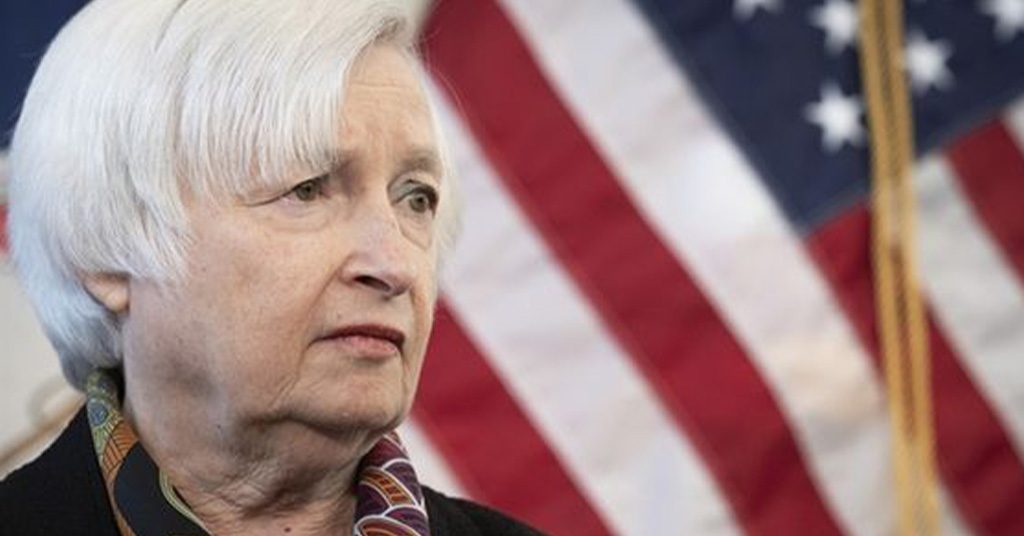
Janet Yellen joined the Board of Governors of the US Federal Reserve in 1994, a major milestone in her career. For the first time, she was directly shaping the country’s monetary policy. Her analytical approach and deep knowledge of the economy quickly earned her respect both inside the central bank and beyond it.
In 2010 she became Vice Chair, which gave her a key role in steering the economy out of the crisis that followed the 2008 crash. During those years Yellen focused on restoring stability through stimulus measures and support for jobs. Her philosophy was that economic policy should aim both to keep inflation in check and to maintain maximum employment.
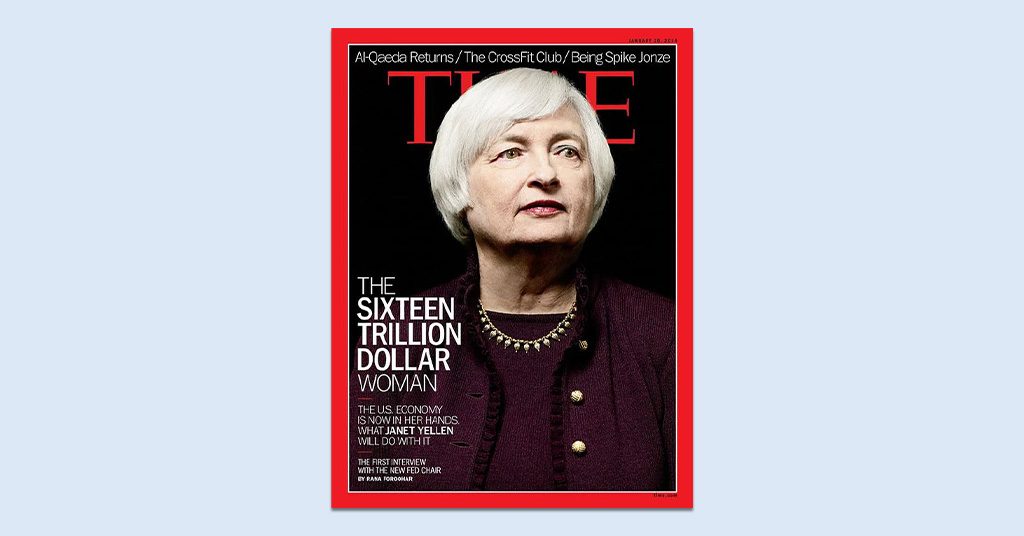
In 2014 Janet Yellen became Chair of the Federal Reserve, the first woman to hold the job in US history. During her term she changed the way the Fed communicated its monetary policy. She put a premium on transparency and on keeping the public regularly informed, which helped restore trust in financial institutions.
One of Yellen’s signature achievements as Chair was guiding a gradual rise in interest rates after years of extremely low levels. The move was needed to keep the economy from overheating and to protect long-term financial stability.
Throughout her term she stood for a balanced monetary policy, pairing stimulus with a watchful eye on inflation. Her leadership style was clear, pragmatic and grounded in careful analysis, all aimed at sustainable growth.
Janet Yellen’s economic policy
One of her most remarkable traits is her ability to see economic trends coming and answer them with concrete measures. Throughout her career she often warned about risks others ignored. Before the 2008 financial crisis, for example, Yellen was among the first to raise concerns about instability in the housing market.
Her policies often focused on supporting households and small businesses, the two groups usually hit hardest in an economic crisis. She also pushed for reforms to make the financial system more resilient to future shocks.
Her philosophy rests on the belief that the economy should serve people. That means reducing inequality, creating more jobs and helping small businesses. This focus on people makes her a rare kind of leader, one who balances complex economic realities with human needs.
Janet Yellen as US Treasury Secretary
In 2021 Janet Yellen became US Treasury Secretary, the first woman in the country’s history to hold the post. She took office in the middle of one of the biggest economic challenges of our time: the global COVID-19 pandemic.
Yellen took charge of the economic recovery and immediately began rolling out measures to ease the burden of the crisis on households and businesses. One of her most significant contributions was helping shape and implement the American Rescue Plan, a massive stimulus package that included direct payments to Americans, funding for small businesses and money to fight the health crisis.
As Treasury Secretary, Yellen made reducing income inequality a priority. She pushed for tax reforms that would tax large corporations and the wealthiest Americans more fairly while funding social safety net and infrastructure programs.
Her leadership didn’t stop at the US border. She played an important role in international economic policy, persuading dozens of countries to back a global minimum corporate tax. The goal is to stop multinational companies from dodging taxes and to create a fairer playing field worldwide.
Yellen was also among the first finance ministers to speak openly about the link between the economy and climate change. She strongly supported investment in green technology and clean energy, stressing the need to prepare the economy for future climate risks.
How did she change the rules of the global economy?
One of Janet Yellen’s greatest legacies is her contribution to the global economy. She led US monetary policy, and she also played an important role on the international stage. Her decisions often shaped the stability of world markets, because the US economy has an enormous influence on the rest of the world.
Under Yellen, the Federal Reserve worked more closely with other central banks, which helped coordinate global efforts to stabilize economies. She also paid attention to issues like climate change and its impact on the economy, a topic central banks had rarely focused on before.
Source: Time Magazine, PHOTOGRAPH BY PETER HAPAK FOR TIME
What can we learn from Janet Yellen?
Janet Yellen’s story is a remarkable example of how intelligence, hard work and consistency can change the world. From her Brooklyn beginnings to the top of the international financial stage, she showed that real leadership takes more than knowledge. It also takes the courage to make hard decisions.
Her approach to economic policy, pragmatic but always mindful of people, shows that success isn’t measured only in numbers but in real impact on society. She doesn’t just understand the economy. She uses it as a tool to build a better, more sustainable world.
If stories like Janet Yellen’s inspire you, take the chance to learn more about how economic policy affects our everyday lives. Her life is proof that with the right vision and approach, you can overcome even the biggest challenges.
Keep looking for new knowledge and opportunities that can help you build your own path, one like Yellen’s: a path of innovation, courage and resilience.
Petar Dyaksov
Entrepreneur and founder of a digital agency, in e-commerce since 2009. He grows online businesses such as Fragrances.bg and Timedix and shares his experience as a speaker, moderator and mentor at nearly 80 conferences and trainings.
More about me