
The Path to Million-Dollar Innovation

Contents · 3 sections
What’s the first thing that comes to mind when you hear the word “innovation”? Do you know what it really means? What kinds of innovation are there? What role do they play in business today? And why is innovation so important (and so sought after)? If you want answers to all of these questions, read on.
TEDx in Bulgaria
Before I get to the point, let me tell you why I wrote this piece. TED talks inspire me enormously and give me a steady supply of ideas. And it makes me even happier that TEDx events now take place in Bulgaria. TEDx events are organized independently under a license from TED, use its format, and exist to spread ideas worth sharing. There have already been several editions in different Bulgarian cities, each more impressive and moving than the last. The initiative of the young people behind them, their warm and professional approach, and the ambition and energy in the room all help move our society forward.
That’s why I’m especially happy that my friends Stoyan Naydenov and Galin Zhelyazkov are organizing TEDxPlovdiv on April 23, 2017. My hometown of Plovdiv has been waiting a long time for this event, and I can’t wait to see it happen. It was about time Plovdiv turned its attention, TED style, to inspiring, life-changing stories, big ideas and timely topics. You can find more information on the event’s website.
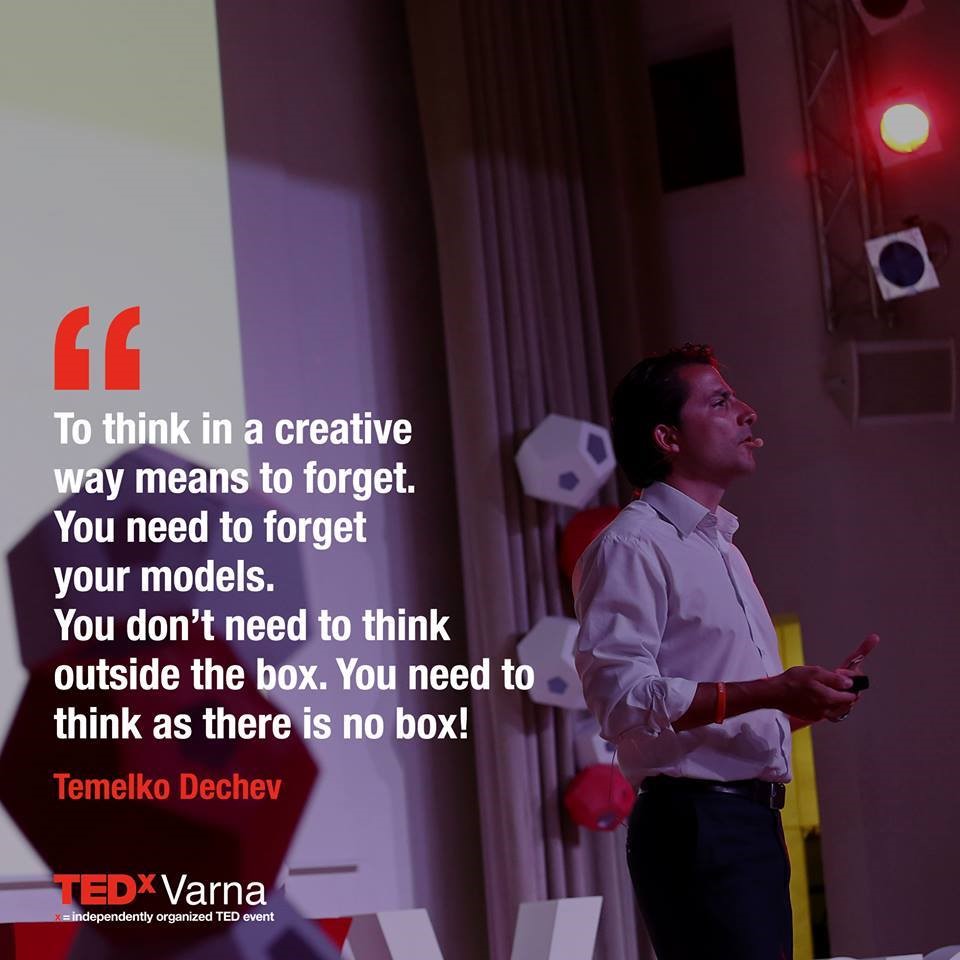
This article was also inspired by a wonderful talk called “Market maker or market taker” (innovators and entrepreneurs versus businesspeople) by my very good friend Temelko Dechev, which he gave at TEDxVarna in 2016 (Varna is a city on Bulgaria’s Black Sea coast).
The topic is like a complex puzzle made of small pieces in shades of the same color. It touches on our character, the people around us and the decisions we make, not just in everyday life but in business, too.
So how do the patterns imposed on us shape our surroundings, our lives and our businesses? According to one of the best-known ideas in philosophy, we are born with a blank mind: a tabula rasa. Small children are curious about everything. That blank slate can’t wait to be filled, so they ask questions. The older we get, the more we worry about whether a question is appropriate, silly or relevant, and the fewer and more “sensible” our questions become. That limits us not only as people but also as innovators in business. It’s a sure way to become a market taker (a follower). That’s why fear of failure, fear of not knowing and self-doubt have no place among leadership qualities. This mix of business, philosophy and human nature asks you to forget: to forget fear, to forget what’s “normal,” the “box” and the limits. Only then are we free to create and innovate.
What is innovation?
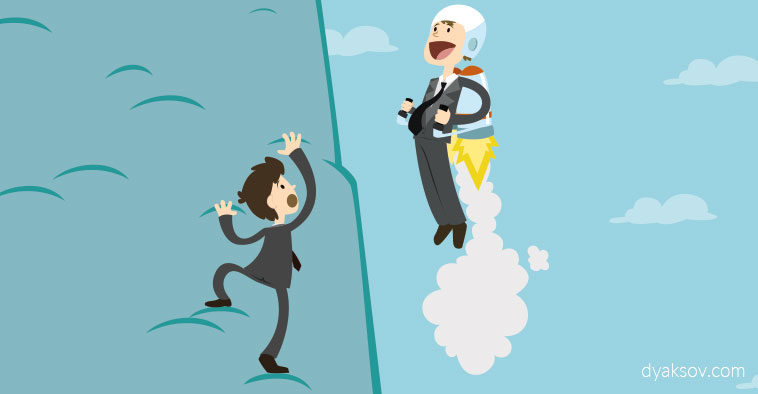
So what does it take to break free and create new trends or products? There are plenty of factors, definitions and formulas, but for me two matter most: challenging the status quo (even the invisible one) and catching the wave of emerging trends. In every industry, the way people work changes over time. But change doesn’t happen by itself. Someone has to do the work and push the new idea through. Most employees just follow the established process mechanically (whether it’s good or not), think alike and even talk alike. Innovators push back. They turn their backs on the crowd in search of something new and better. In their drive to break the status quo, they learn to tell the “unchanging laws” that form a solid foundation from the “outdated beliefs” that have to be pulled out by the roots and replaced before innovation can happen.
You don’t need a crystal ball to be an innovator. You just need a wide lens and an open mind. Sometimes inspiration comes from someone else’s work: innovators watch trends and find ways to put them to use in the real (business) world.
There are many types of innovation, depending on how you slice them. The most common way to classify them is by their impact on the market and on people:
- Breakthrough innovation (radical innovation)
- Disruptive innovation
- Incremental innovation
Breakthrough innovation
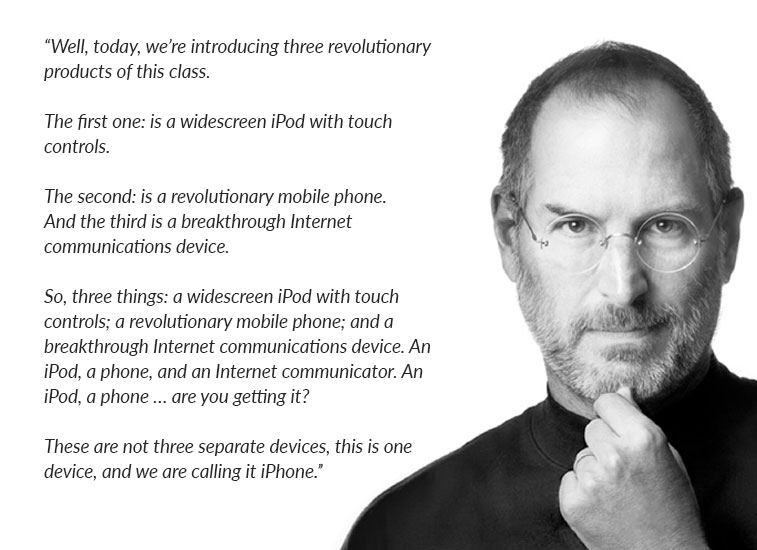
Breakthrough innovation is usually what people picture when they hear the word “innovation.” It means a fundamental, radical change to an existing market, product or world, one that produces something with no equivalent so far. A product like this often combines the features of several different products in one. One of the best-known examples is Apple’s products. When the iPhone came out, its simplicity, beauty, features and ease of use put every other manufacturer to shame. Sure, other devices could do some of the same things, but none of them came close. In the end, the product was simply different. That vision, that focus on the future and its needs, is exactly what makes an innovation radical, even when the technology already exists.
These are also the innovations that resonate most with society and do the most to shape our future. But they are also among the hardest to pull off. Here are just a few of the obstacles:
- Lack of funding. Obvious as it sounds, this is the main reason startups fail. Breakthrough innovations are… well, radical, and the market isn’t always ready for them. That’s why they come with lots of unknowns, high risk and, as a result, high costs. Experience shows that the less proven a technology is, the longer it takes to catch on.
- Lack of focus. Steve Jobs said it best: “You have to pick carefully. Innovation is saying no to 1,000 things.” That’s how you stay on the right path and avoid getting distracted by too many side projects.
- Lack of understanding of the market and its needs, and a lack of technical expertise.
Disruptive innovation
Clayton Christensen, the best-known theorist of disruptive innovation, offers an interesting definition. He sees it as something that starts at the edges of a market: new players show up and offer products or services in a better, more convenient way. In doing so, they redefine the niche, push aside the traditional business model and arrive on the scene as a strong new competitor.
There are many examples of disruptive innovation, but one of the most popular is Dell. As a college student, Michael Dell realized he could order parts, assemble computers and ship them to customers himself for far less than a computer cost in a store. That led to a whole new business model for selling computers: order online and get your machine a few days later. It cut the middlemen out of the chain and streamlined the entire process. Customers came out ahead too, because they could customize and “build” exactly the device they wanted. Technically, Dell doesn’t make the components, but it optimized and disrupted the whole process, and that earned it a place among the market leaders.
Incremental innovation
Put simply, incremental innovation means doing what we already do, only better. It means taking steps to improve quality, cut costs and make other gains that build on existing processes and products. It’s most common in high-tech companies that have to keep improving their products to stay competitive.
It comes down to three main components:
- It meets customers’ needs;
- It makes the product (and therefore the company) more competitive;
- It focuses on cutting costs.
A mobile carrier upgrading its phone and internet service is one example.
Another great example is Coca-Cola’s strategy. Line extensions like Cherry Coke, Coca-Cola Lime and Coca-Cola Life help keep a 130-year-old brand relevant and fresh, a brand that keeps up with new trends (or sets them).
Nikola Tesla and Thomas Edison
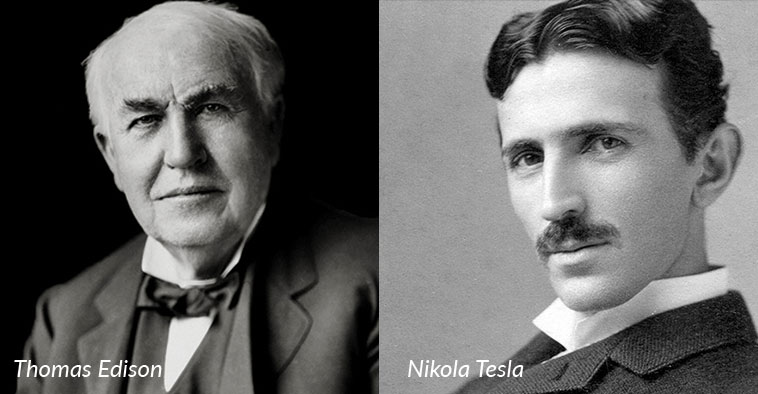
Still, the best way to explain innovation is with an example. And the best example is one of the most famous rivalries (let’s be honest, wars) in history, between two brilliant minds: Nikola Tesla and Thomas Edison.
Tesla is one of the most striking examples of a true innovator, someone who looked to the future and weighed countless possibilities. Edison, on the other hand, is seen as the “perfect” businessman: he saw trends coming and found ways to ride them and meet the demand. Yet both are considered innovators. Both held many patents for inventions that are still part of our daily lives. And both are linked to discoveries that changed the world as people knew it then.
It all started when Tesla went to work for Edison’s company. He fixed many of the weak links in the chain, but when he didn’t get the pay he’d been promised, he quit in anger, and the war between them began. Edison, a devoted champion of tradition and direct current, often lagged behind on the innovation scale and even tried to sabotage the work of Tesla, by then his enemy. Tesla, for his part, grew more and more popular with his ideas for alternating current and the many other innovations he proposed. Many of them, though, were so far ahead of their time that even his believers ran out of patience. In the end Tesla died poor, while Edison enjoyed plenty for the rest of his life, both public recognition and wealth.
Tesla fits the first criterion: he challenged the status quo (in his case, even the future). Edison caught new trends and met the demand they created (not always with a product he had developed himself). Some will say Thomas Edison was just a businessman with sometimes outdated views (see https://en.wikipedia.org/wiki/War_of_Currents) who simply saw what people needed at the time and offered a solution. Others will argue that, for all his brilliance, Tesla lacked business sense, and that’s why he never achieved as much as he could have. So where is the fine line? Or is it all just a matter of opinion? Seen this way, Tesla’s brilliant mind combined with Edison’s entrepreneurial spirit is the perfect formula for innovation. When it comes to breaking old habits and changing an entire industry, an entire (business) world, the two go hand in hand.
Either way, everything that makes a great innovator comes from unlimited creativity. We’ve all seen the video of the ant that won’t leave a circle someone drew around it in pencil, even though nothing is actually stopping it. Wandering around inside the circle as if something really holds it back, the ant is a symbol of a simple truth: our limits are in our heads. And we need to forget them. Once we’re free, all that’s left is to throw ourselves into whatever we can pour our heart and soul into, and create.
The first to launch a new product, method or service are the ones who get to seize the market and become leaders. They take the biggest risks, but they also win far more. If we stop moving and stop growing our business and our potential, sooner or later the competition will pass us and the market will reject us. Then we won’t just fail to meet its needs. We’ll be shut out of growth, profit and purpose altogether.
That’s why innovation matters so much. Only when we dare to be creative, to break free, to try and to take risks despite the unknowns, can we become people who make a difference: leaders. The ones who don’t just profit from markets that already exist, but create new ones.
Petar Dyaksov
Entrepreneur and founder of a digital agency, in e-commerce since 2009. He grows online businesses such as Fragrances.bg and Timedix and shares his experience as a speaker, moderator and mentor at nearly 80 conferences and trainings.
More about me