Christine Lagarde biography: the story of an exceptional leader

Contents · 9 sections
- Christine Lagarde’s early years
- First steps in law
- Rise in politics and international finance
- Leading the International Monetary Fund
- Christine Lagarde’s role in promoting sustainable economic development
- The European Central Bank and the stability of…
- Personal qualities that inspire
- Her influence on economic policy
- Lessons from Christine Lagarde
Christine Lagarde is one of the most remarkable names in global economics and politics. From practicing law to leading the International Monetary Fund (IMF) and the European Central Bank (ECB), her career is an inspiring mix of ambition, persistence and a fresh approach to leadership. In this article, I’ll look at her life and achievements and at how her vision and strategies are changing the way global finance is run.
You’ll learn about her early years, what drew her to economics and her biggest successes. Beyond her professional path, I’ll also look at the personal qualities that carried her to one of the highest positions in international politics.
Christine Lagarde’s early years
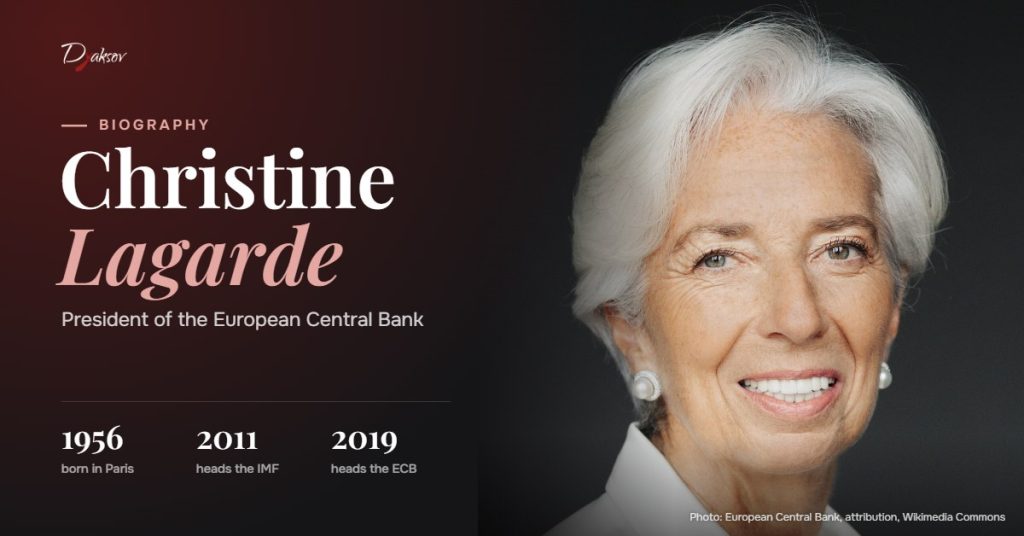
Christine Lagarde was born in 1956 in Paris, France. She grew up in a family with strong academic and cultural interests and showed an early drive to succeed. Economics wasn’t her first focus, but even as a child she stood out for her discipline and work ethic.
She completed high school in France, but her education soon took her abroad. She won a scholarship to study in the United States, which gave her an international perspective at a young age. In 1974 she enrolled at Paris Nanterre University (also known as “University of Paris X”), where she studied law and later specialized in economics and international relations.
Her education was shaped by prestigious academic settings where she met experts from all over the world. Those encounters gave her a broad outlook and a deep understanding of different economic systems, which later became the foundation of her professional success.
First steps in law
After finishing her studies, she joined the world-renowned law firm Baker McKenzie. She quickly stood out for her ability to handle complex cases involving commercial law and international contracts.
She rose to the very top of the firm and became the first woman to chair Baker McKenzie. The role demanded legal expertise, strategic thinking and leadership skills, all of which helped her run a firm with more than 4,000 employees around the world.
Her early experience as a lawyer gave her a distinctive approach to leadership: the ability to find legal solutions to economic challenges. That became the starting point for the next stage of her career in the global economy.
Rise in politics and international finance
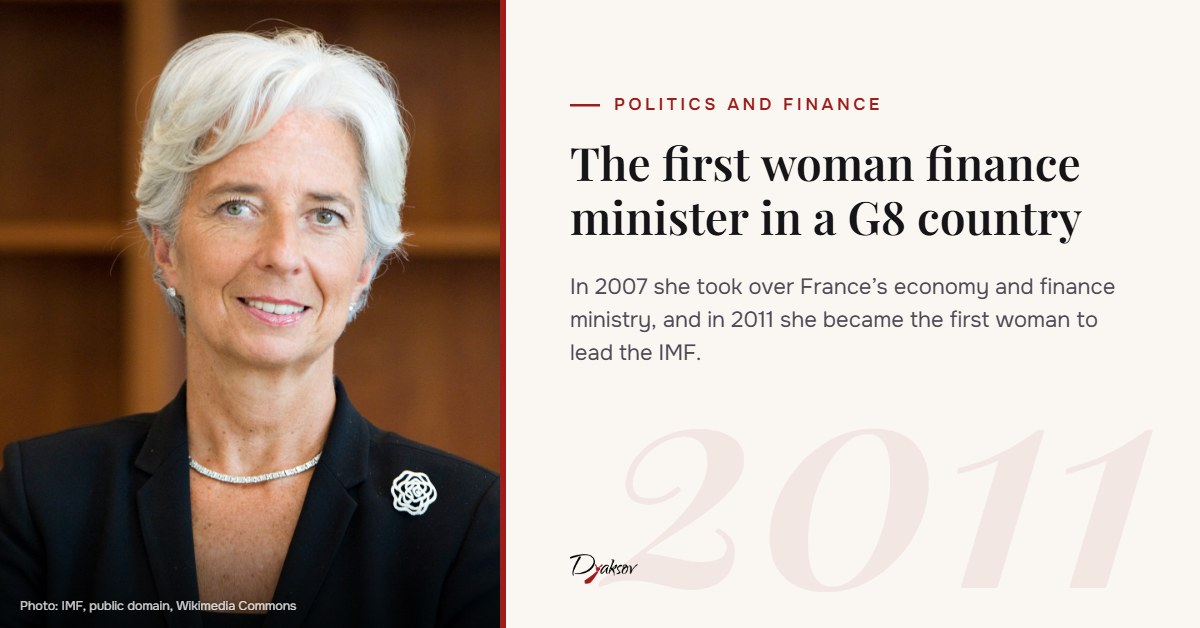
Christine Lagarde’s move from law into politics and economics is a story of transformation and personal growth. In 2005 she was appointed France’s minister of trade, and soon after she became minister of finance, the first woman to hold that post in the country.
As finance minister, she focused on financial transparency and stability. She pushed through reforms that made France more competitive globally and established herself as one of Europe’s most experienced economic leaders. Her work caught the attention of international organizations.
Leading the International Monetary Fund
In 2011 she was selected as managing director of the International Monetary Fund (IMF). It was one of the biggest challenges of her career, because she took over the fund in the thick of a global economic crisis.
During her tenure, she championed international cooperation and proposed innovative solutions to Europe’s debt crises and to the financial problems of developing countries. One of her hallmarks was a focus on long-term economic stability, which earned her the respect of economists and leaders worldwide.
Christine Lagarde’s role in promoting sustainable economic development
One of Christine Lagarde’s most significant initiatives has been bringing sustainability into economic policy. She stresses the importance of financial stability and actively works to connect it with long-term goals such as tackling climate change and reducing economic inequality.
As president of the European Central Bank, Lagarde has championed “green” investment and urged financial institutions to factor environmental issues into their strategies. It’s a major shift for the global economy, laying the groundwork for a financial system that not only generates growth but also protects the planet’s resources.
She also supports policies that put social justice first: access to education, healthcare and economic opportunity for every part of society. In doing so, she shows that sustainable development is not just a vision but a workable approach that brings social, economic and environmental interests together.
Lagarde’s strategy is a model for how economic leaders can make real, forward-looking change.
The European Central Bank and the stability of the euro
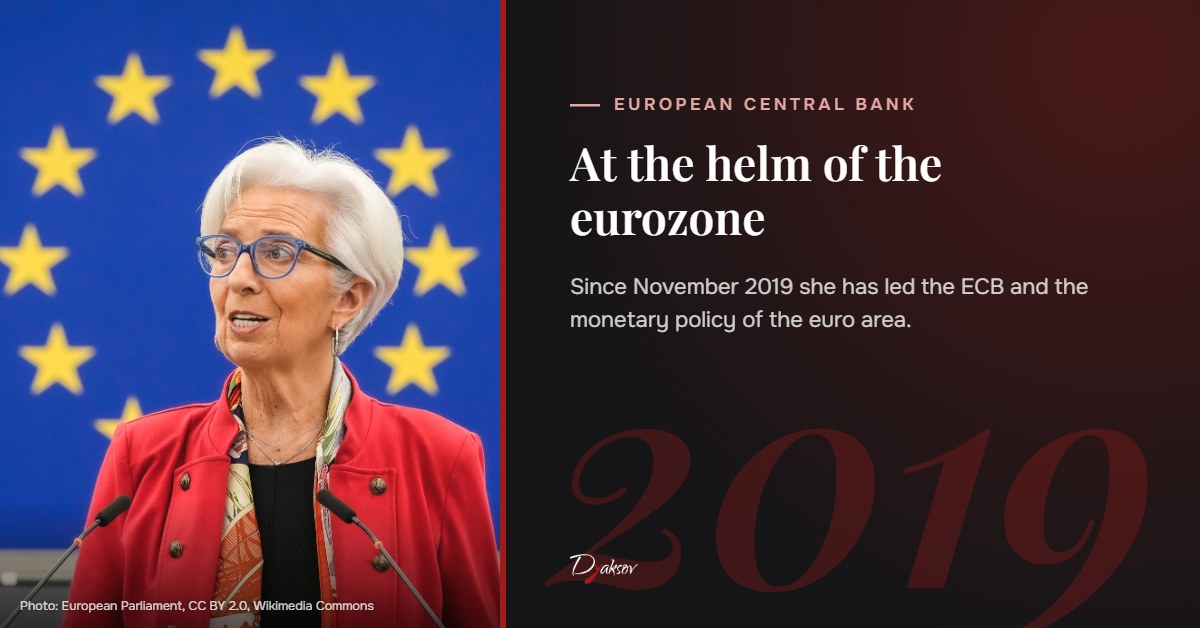
After her successful run at the International Monetary Fund, Lagarde took on a new challenge in 2019, becoming the first woman president of the European Central Bank (ECB). At a time when Europe was facing economic and political challenges, including the fallout from Brexit and the COVID-19 pandemic, her task was to safeguard the stability of the euro and the economic resilience of the eurozone.
Her leadership at the ECB has been marked by measures to stimulate the economy, including ambitious bond-buying programs and, through the pandemic, low interest rates. Lagarde has shown that even in global crises like the pandemic, the economic system can adapt to new realities through well-coordinated efforts and an analytical approach.
In this role, too, she continues to focus on climate change, bringing the idea of a “green economy” into the ECB’s monetary policy. That has positioned the institution as a leader in sustainable finance.
Personal qualities that inspire
Known for her confidence, composure and ability to make decisions under pressure, Lagarde stands out for building trust within the teams she works with and for motivating the people around her.
One of her most impressive qualities is her determination. Even under criticism or doubt, she holds firm to her goals and keeps pushing reforms she believes will strengthen economic stability. That has earned her a reputation as a leader who doesn’t just follow the rules but reshapes them.
Her influence on economic policy
One of Christine Lagarde’s greatest legacies is her vision of economic fairness and global cooperation. She has made a strong case for international dialogue and for countries working together to tackle global challenges.
Lagarde has also drawn attention to gender equality in the economy. She believes women play a key role in economic development and often speaks up for bringing more women into decision-making.
In every position she has held, she has shown that progress comes through innovation, vision and a commitment to a better future.
Lessons from Christine Lagarde
Her career shows how persistence, knowledge and adaptability can break down any barrier. For anyone who wants to leave a mark in their profession, her story is proof that success comes from a combination of clear goals, constant improvement and a willingness to take responsibility.
She inspires people to pursue their dreams despite the obstacles and to use their knowledge to create positive change in society.
Her career and her contribution to the global economy will remain an inspiration for generations to come.
Whether she is running complex institutions or bringing new ideas into economic policy, she proves that change is possible with vision and determination. Let her story be a motivating example for anyone looking for their place in a world full of challenges and opportunities.
Photos: European Central Bank (attribution); IMF (public domain); European Parliament (CC BY 2.0), via Wikimedia Commons.
Petar Dyaksov
Entrepreneur and founder of a digital agency, in e-commerce since 2009. He grows online businesses such as Fragrances.bg and Timedix and shares his experience as a speaker, moderator and mentor at nearly 80 conferences and trainings.
More about me