
Jack Ma biography: from humble beginnings to Alibaba

Contents · 10 sections
- Early life and education
- Early career and first ventures
- Alibaba: the rise of a tech giant
- Leadership style and business strategy
- Alibaba’s ecosystem and subsidiaries
- Challenges and obstacles
- Philanthropy and social impact
- Global recognition and influence
- Retirement and new ventures
- Lessons from Jack Ma’s path
Jack Ma is one of the best-known names in business, and his mark on entrepreneurship and e-commerce is felt around the world. In this article, I’ll walk you through his life and achievements, from humble beginnings to co-founding Alibaba Group, one of the world’s leading technology companies.
Early life and education
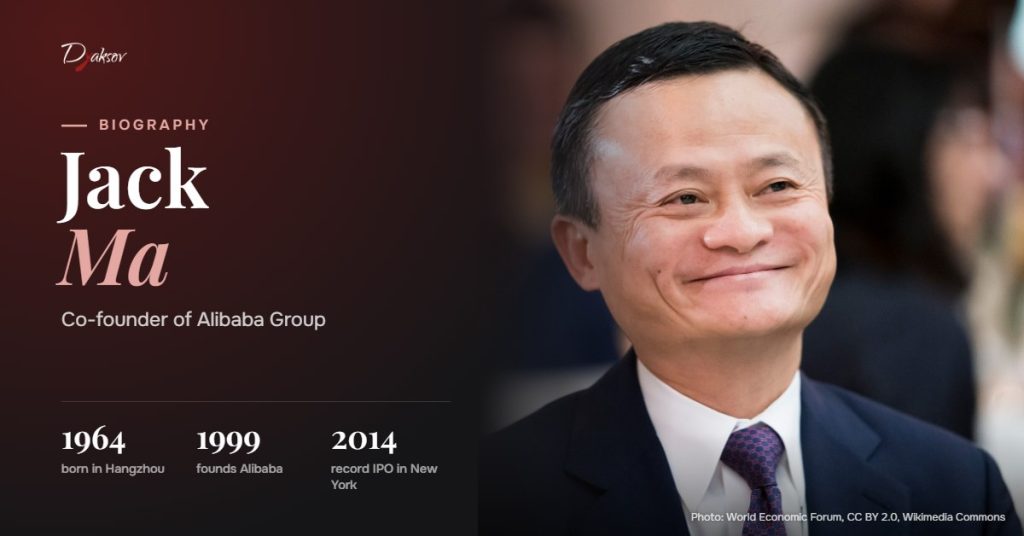
Jack Ma, born Ma Yun, was born on September 10, 1964, in Hangzhou, Zhejiang Province, China. He grew up in a modest family, and the challenges and setbacks he faced shaped his character and determination.
He was raised by parents with traditional Chinese values who worked as storytellers and performers. Their artistic background gave him a creative spirit and an appreciation for the power of storytelling.
Despite struggling academically, Jack Ma persevered and was admitted to Hangzhou Teachers Institute, where he earned a bachelor’s degree in English. That experience played a key role in shaping his worldview and his communication skills.
Early career and first ventures
In 1995, on a trip to the United States, Jack Ma saw the internet for the first time. The encounter sparked his curiosity and a desire to explore its untapped potential for business and connection.
Early in his career, he failed again and again: job application after job application turned down, ventures that went nowhere and a rejection from Harvard University. But those setbacks taught him valuable lessons and made him resilient.
In 1995 Jack Ma launched China Yellow Pages, an online directory designed to connect Chinese businesses with potential customers. That venture marked the start of his success as an entrepreneur and laid the groundwork for what came next.
Alibaba: the rise of a tech giant
Inspired by his trip to the United States, Jack Ma saw the need for an online platform that would make global trade easier and bridge the gap between Chinese manufacturers and international buyers. That vision led to the creation of Alibaba.
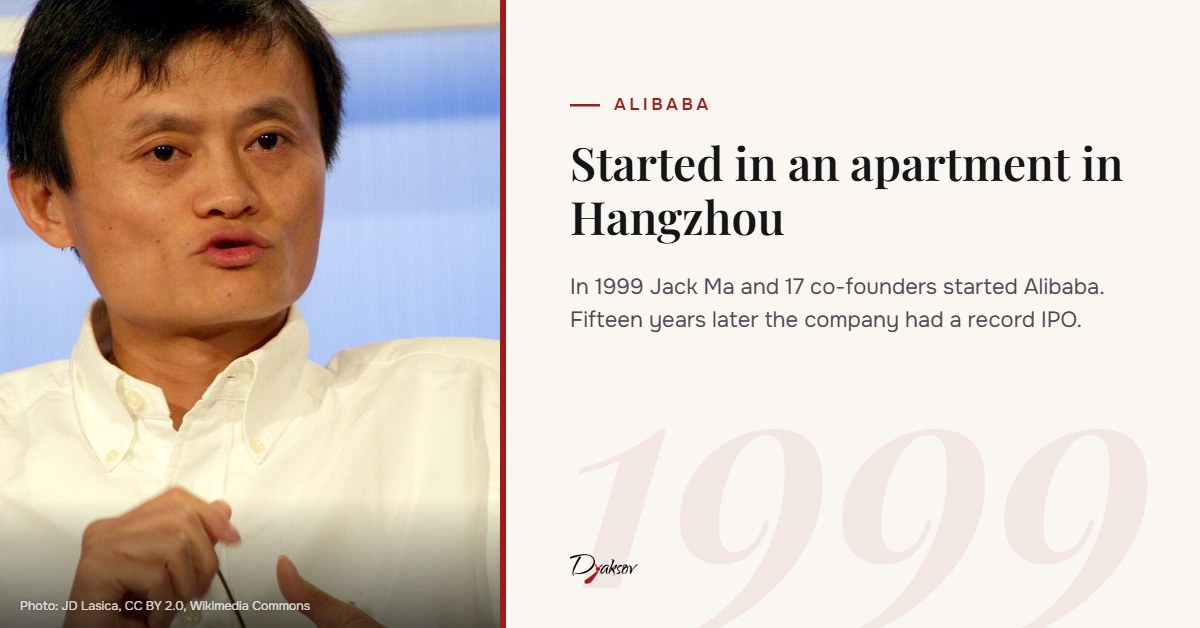
In 1999 Jack Ma and a group of friends co-founded Alibaba in Hangzhou, China. Their original vision was to build a business-to-business e-commerce platform that would transform trade and empower small and medium-sized businesses.
Over the years, Alibaba grew from a B2B marketplace into a complete ecosystem. It now covers business-to-consumer and consumer-to-consumer commerce along with many other online services. That evolution has allowed Alibaba to meet the changing needs of both consumers and businesses.
Along the way, Alibaba hit several major milestones. One of the biggest was its initial public offering on the New York Stock Exchange in 2014. It was the largest IPO in history at the time, and it cemented Alibaba’s position as a global tech giant.
Leadership style and business strategy
Jack Ma’s leadership style is charismatic and visionary. He puts innovation and customers first and builds a culture of collaboration that encourages creativity and risk-taking.
One of his key achievements is a corporate culture built on innovation and continuous learning. He encourages his people to think differently and to treat challenges and failure as steps toward success.
To expand Alibaba’s global reach, Jack Ma used a range of strategies, including strategic partnerships, acquisitions and investments in foreign markets. These moves helped Alibaba build a strong presence outside China and earn international recognition.
Alibaba’s ecosystem and subsidiaries
Alibaba’s ecosystem spans a wide range of businesses, including e-commerce platforms, cloud services, digital payments, logistics, entertainment and more. This diverse portfolio has fueled Alibaba’s success and growth.
Taobao, launched in 2003, is Alibaba’s consumer-to-consumer platform and the largest online marketplace in China. Tmall, introduced in 2008, focuses on business-to-consumer sales and gives manufacturers and retailers a way to reach Chinese consumers. AliExpress, launched in 2010, is Alibaba’s international online marketplace.
Ant Group, an Alibaba affiliate, transformed financial technology with its digital payment platform Alipay. Ant Group’s innovations, including mobile payments and digital banking, changed how financial transactions happen in China.
Alibaba has made strategic investments in many sectors, including logistics, artificial intelligence, entertainment and healthcare. These investments have diversified its portfolio and placed the company at the forefront of innovative industries.
Challenges and obstacles
Alibaba has struggled with counterfeit products on its platforms, which hurt consumer trust and the company’s reputation. Jack Ma responded with measures to fight counterfeits and win that trust back.
Alibaba operates in a highly competitive market, both in China and globally. Rivals such as JD.com and Amazon put pressure on its market share, which means it has to keep innovating and making smart strategic moves.
Alibaba has also faced regulatory challenges and government scrutiny, especially over antitrust issues and data privacy concerns. These pressures pushed Jack Ma and Alibaba to adapt their business practices and comply with changing regulations.
Jack Ma’s outspoken nature and occasional controversial remarks have drawn attention and sparked debate. His public image has come under scrutiny and has at times overshadowed his achievements. Even so, he remains a respected figure in the business world.
Philanthropy and social impact
Jack Ma is known for his philanthropy and his commitment to giving back. He has committed a significant part of his wealth to charitable initiatives in education, environmental protection and healthcare.
The Jack Ma Foundation, established in 2014, aims to promote education, entrepreneurship and environmental sustainability. Through the foundation, Jack Ma has launched a number of programs and projects with a positive social impact.
He is also a firm believer in the power of education and entrepreneurship to change lives. He started initiatives such as a rural teachers program, which provides training and support for teachers in rural areas, and eWTP (Electronic World Trade Platform), which promotes cross-border e-commerce.
Global recognition and influence
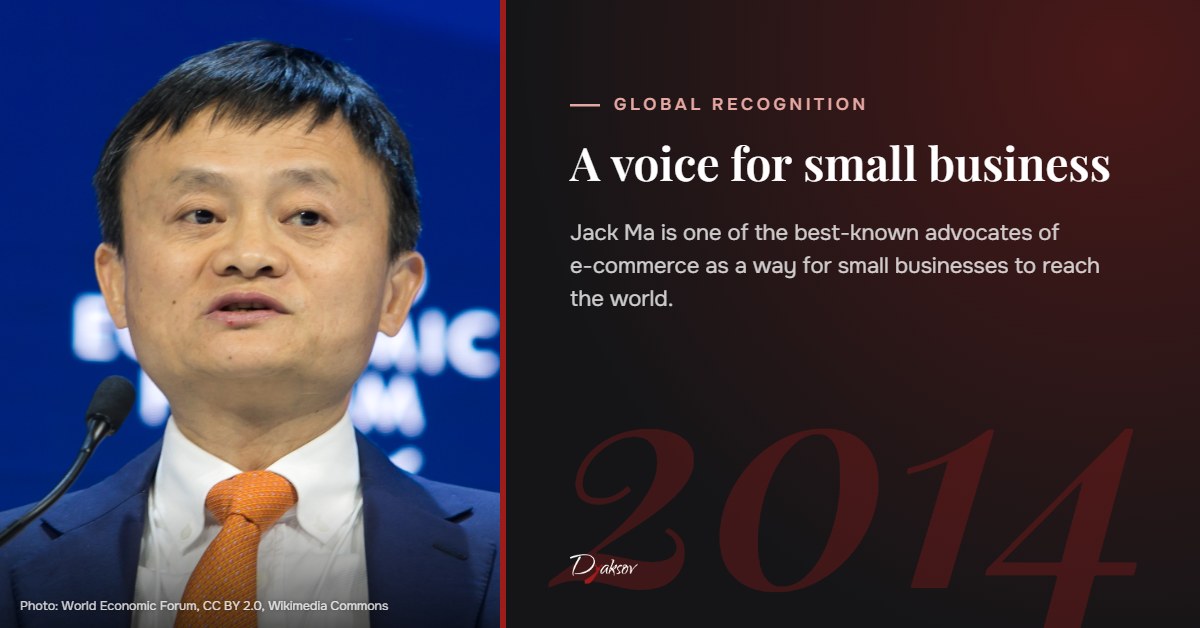
Jack Ma’s path as an entrepreneur and Alibaba’s success have had a huge impact on global business. His innovative strategies and his vision for the future of e-commerce inspire entrepreneurs and shape industry trends.
Over his career, Jack Ma has received many awards and honors for his contributions to business, leadership and philanthropy. They include being named to Time magazine’s list of the 100 most influential people and receiving the Malcolm S. Forbes Lifetime Achievement Award.
Jack Ma is a sought-after speaker and thought leader who often shares his views on entrepreneurship, innovation and globalization. His speeches and interviews offer valuable guidance and inspiration to aspiring entrepreneurs and business leaders around the world.
Retirement and new ventures
In 2019 Jack Ma announced his decision to step down as executive chairman of Alibaba, paving the way for a smooth leadership transition. The decision opened a new chapter in his life and gave him room to pursue other ventures and passions.
After Jack Ma stepped down, Daniel Zhang became chairman of Alibaba Group. Under Zhang, who led the group until 2023, Alibaba kept expanding its global presence and exploring new paths to growth, including artificial intelligence and digital transformation.
Although Jack Ma has left his role at Alibaba, he remains active in a range of charitable and educational projects. He keeps pursuing his passion for promoting entrepreneurship, supporting sustainable development and empowering the next generation of leaders.
Lessons from Jack Ma’s path
Jack Ma’s story holds valuable lessons for aspiring entrepreneurs: the importance of resilience, treating failure as a chance to learn, thinking globally and building a culture of innovation.
Part of Jack Ma’s success comes from his ability to innovate and adapt to changing market dynamics. He urges entrepreneurs to embrace breakthrough technologies, challenge the status quo and keep evolving to stay ahead of the competition.
Jack Ma’s quotes are a source of inspiration for entrepreneurs and anyone looking for motivation. Two of the best known are “If you don’t give up, you still have a chance” and “Your attitude is more important than your abilities.”
Jack Ma is proof of the power of persistence, innovation and visionary leadership. From his early struggles to co-founding Alibaba and transforming e-commerce, he has left an indelible mark on the business world.
His influence reaches far beyond Alibaba. His philanthropy, thought leadership and commitment to social causes continue to inspire people and build a lasting legacy. As he takes on new ventures, the world is eager to see the next chapter of Jack Ma’s remarkable story.
Photos: World Economic Forum (CC BY 2.0): photo 1, photo 2; JD Lasica (CC BY 2.0), via Wikimedia Commons.
Petar Dyaksov
Entrepreneur and founder of a digital agency, in e-commerce since 2009. He grows online businesses such as Fragrances.bg and Timedix and shares his experience as a speaker, moderator and mentor at nearly 80 conferences and trainings.
More about me