3 Facebook Remarketing Tactics for Online Stores (Video + Slides)

Contents · 7 sections
3 proven Facebook remarketing tactics for online stores
You might associate 2004 with the Olympic Games or with Bulgaria joining NATO. But something else happened that year, something so important that it changed our lives, the way we communicate and the way we see the world. In 2004, thefacebook was born. Back then, thefacebook was a cool social network for college students, created by an ordinary Harvard student (who was still in school at the time and never finished his degree). Despite its controversial beginnings, Facebook is now an inseparable part of our daily lives. It stopped being just a place to share photos of kittens and puppies, play games, build virtual farms and send annoying notifications a long time ago.
Besides being a favorite pastime that fills a big part of our day, Facebook is now also where owners of every kind of business run, promote and grow their business. Facebook helps us advertise successfully, which is why about 85% of businesses (of every kind) have profiles or pages on the network.
Facebook noticed, of course, and the organic reach we get is no longer enough. Facebook has cut it, which largely forces us to spend more money on ads.
There are plenty of examples of why Facebook advertising matters. Just look at Donald Trump. He made it to one of the most powerful positions in the world partly with the help of social media (and Facebook in particular).
In 2016, 13.33% of all digital ad spending worldwide went to Facebook ads, and Facebook adds new features to Ads Manager every month. At the time of writing, Facebook and Google are expected to take more than 50% of all digital ad spending in 2017 (and that share is projected to grow every year). That’s why online advertising has to be a top priority. Which brings us to the question every merchant asks: “How do I make more sales with Facebook ads?”
But why stop at targeting when we can do something much better, something that brings far more (and better) results: remarketing campaigns?
What is remarketing (retargeting)?*
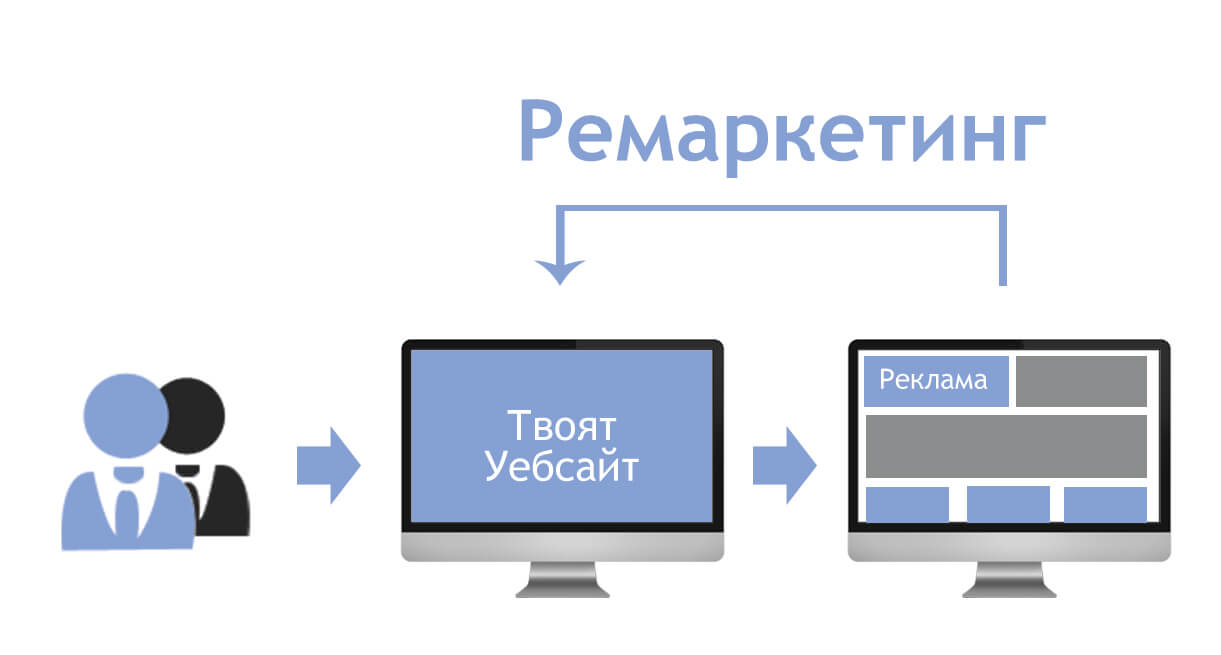
Remarketing is a form of online advertising that helps us reach the people who visited our website but (for whatever reason) didn’t place an order. On most websites, only 2% of traffic converts into a sale on the first visit. Remarketing (also called retargeting) makes it easy to reach the other 98%.
*Remarketing and retargeting are very similar, but “remarketing” is the more common and preferred term.
Facebook remarketing works by installing a pixel on your website: a few lines of code that tell Facebook what a visitor saw, visited or did on your site. In other words, it detects individual visitors and tracks their actions on your site. This way Facebook collects information about each user, their profile and their behavior.
So how does Facebook remarketing actually work? Through events.
An event is something that happened on your website. Events show you exactly what customers do there, so you can serve them specific ads that are relevant to them.
The 10 most commonly used Facebook events:
- Page view: The most basic Facebook pixel event. It tells you that a user visited a page on your website.
- View content: Shows what type of page the user visited. It could be a product page, a blog post and so on. This gives you more specific information about what exactly the customer is interested in.
- Search: Tells you about visitors who searched for something on your website.
- Add to cart: Users who added something to their cart.
- Add to wishlist: Users who added a product to their wishlist.
- Initiate checkout: Users who started checking out.
- Add payment info: Users who entered payment details, such as their credit card.
- Make purchase: Users who placed an order.
- Lead: Users who sent you an inquiry. Obviously, if someone sent you an inquiry, they want to buy from you or at least are interested.
- Complete registration: Users who signed up for an account.
Next comes building audiences. Using the data the pixel collects (Facebook matches it to people’s Facebook profiles), Facebook can build segmented audiences based on different criteria, so you can serve them specific, targeted ads that convert better. On top of that, you can use this information to create audiences similar to them (lookalike audiences). Lookalike audiences make it much easier to reach new customers, because these people share, to some degree, the same characteristics (or similar interests) as your existing customers.
For example, you can create an audience of people who have already ordered from your online store. They’re a much narrower group, which lets you serve them precise, specific and relevant ads.
As a co-owner of an online store that relies heavily on Facebook advertising, I’ll walk you through three cases where my team and I built successful Facebook remarketing campaigns. They ran from the beginning of the year through the end of March 2017. I’ll show you the actual results of each campaign and how you could use them in your own business.
Note: Keep in mind that the ROI here is not calculated objectively. It’s a benchmark (for us) of how successful a campaign was. Also, Facebook’s statistics aren’t perfectly accurate and may differ from actual results. On top of that, the Facebook pixel also counts assisted sales: if a customer visited your page through a Facebook ad but ordered a few days later (coming from somewhere else), Facebook will still credit that sale to its ad.
Case #1: Abandoned cart
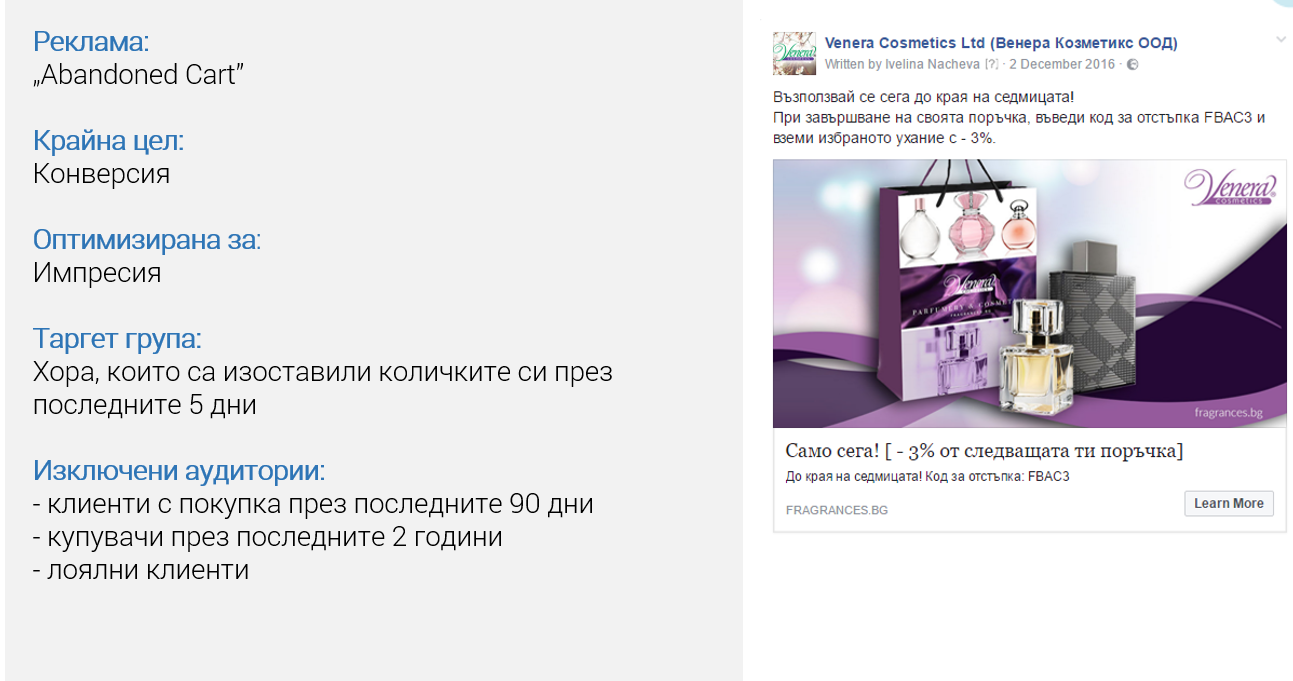
The most basic thing you can use Facebook Ads for is an abandoned cart reminder. Here’s how it usually goes: a user adds a product to their cart but, for some reason, doesn’t finish the order and never clicks “complete checkout.”
Still, you now know this user is interested. How do you take advantage of that and nudge them to buy? The most common (and most effective) way is to offer a discount or promotion that motivates them to complete the order. The bigger the discount, the more successful the campaign, of course. But even a small discount gets results. The effect is purely psychological: you don’t just remind them of your website and the interest they showed, you also offer a discount specifically to them.
This particular campaign has conversions as its end goal, but it’s optimized for impressions. Why impressions? In general, I recommend optimizing most campaigns for clicks or conversions, because then you really only pay for people who visit your website. But this audience is very specific: people who abandoned their carts in the last 5 days. They need something much more targeted, and the more times they see the ad, the higher the chance they’ll convert. The ad copy encourages them to buy and grab the promotion before it expires (which, of course, is very soon).
It doesn’t matter what you sell. You can run this remarketing campaign for any online store.
Our results?
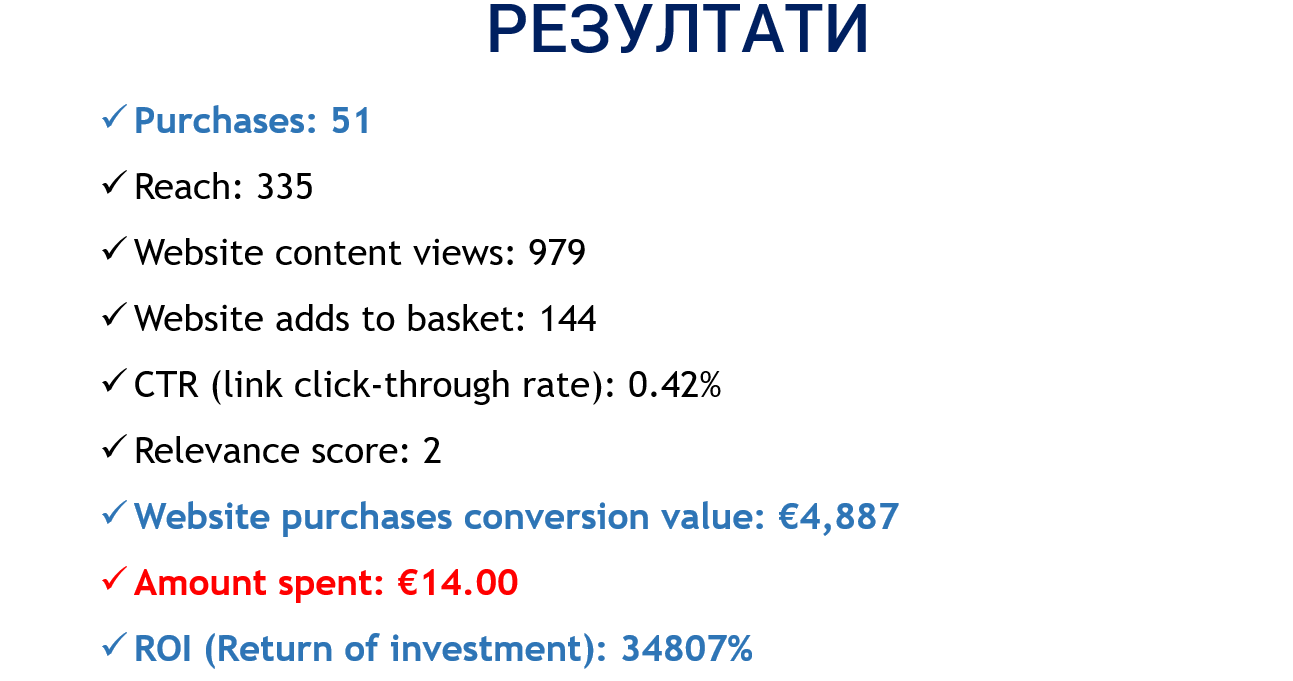
51 orders, €14 spent on ads, nearly €5,000 in orders generated.
Case #2: Product running out
A reminder that a product is running out, in this case a bottle of perfume. This one is also widely applicable and can be adapted to the products you sell. You do need to factor in how long your products last (and their shelf life).
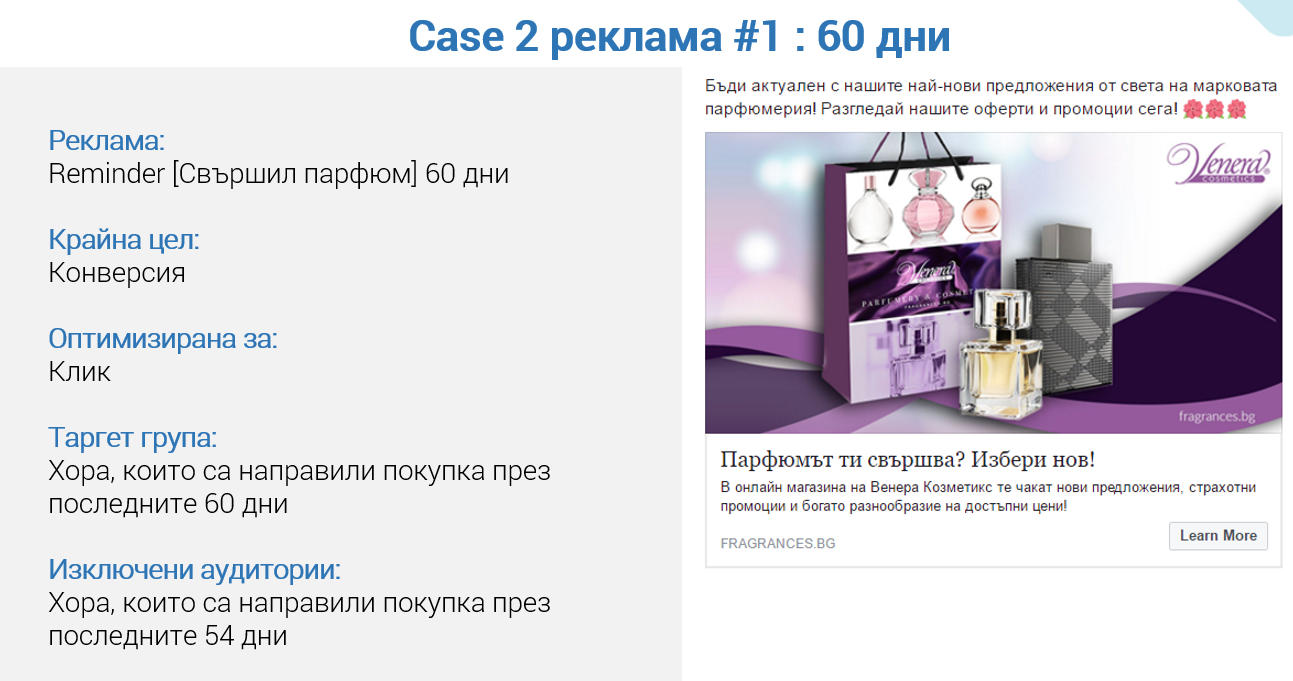
The logic here is pretty obvious. You know this customer has already shown interest, and you know how long your products last (roughly, since you can’t always calculate it precisely), so you send them a product offer. That way, you get customers who have already bought once to convert again, and in the best case you turn them into regular, loyal customers.
This campaign is optimized for clicks, and its end goal is conversions. We include people who bought in the last 60 days and exclude those who bought in the last 54. In other words, we target the people who shopped within that 6-day window.
Since it’s hard to say exactly when a bottle of perfume runs out (it’s far too subjective), we’ve experimented with different time frames.
We’ve also tried an audience of people who bought in the last 90 days, excluding those who bought in the last 84.
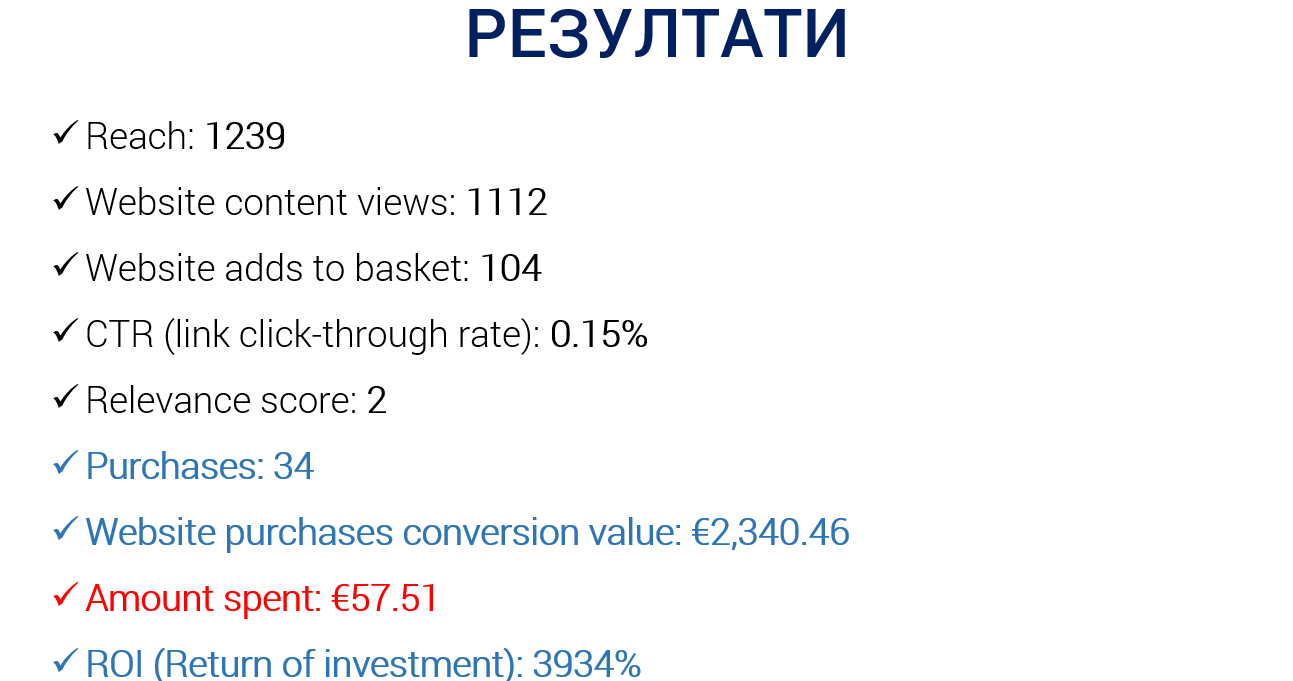
The first version brought 34 orders, about €58 in ad spend and around €2,400 in orders generated.
Case #3: Dynamic product ads
Dynamic ad campaigns, built from a product catalog feed in Facebook

You set the criteria in Facebook, and it runs personalized ad campaigns for the products visitors viewed on your website. Of course, these will be different for every website, personalized based on the product feed you give Facebook. In our case, only products that are in stock are shown.
Here we have 2,016 orders, a little over €30 invested in ads and almost €18,000 in sales generated.
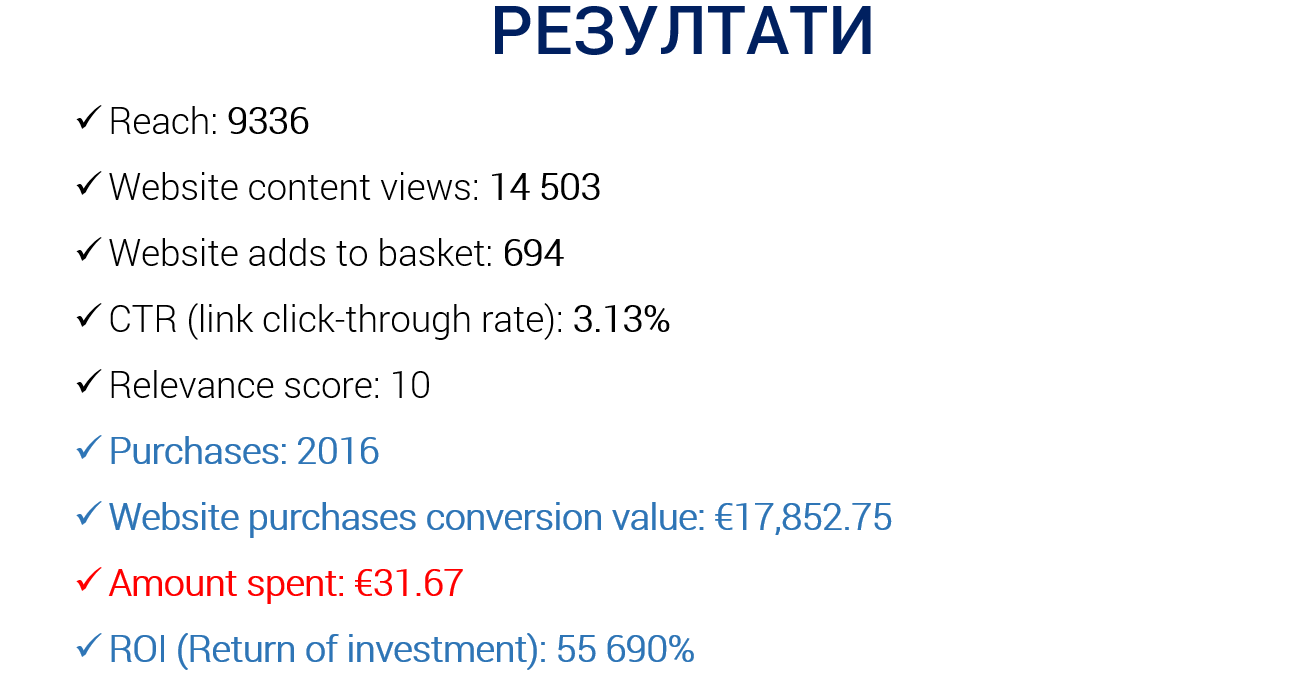
Here, too, we experimented with different creatives (banners, copy), and the results varied. It’s important to test and set aside a budget for trial ads, so you can draw the right conclusions and see what works for you and your online store.
Final thoughts
We’ve now seen firsthand that Facebook remarketing ads work, delivering great results and an excellent return on investment. What you always have to keep in mind is that you need to offer quality content, quality products and fair prices. Without them, you simply can’t get results like these. At the same time, the more popular your brand, the more familiar and positively received you’ll be, and the better your chances of more conversions.
None of this matters, though, if you don’t have traffic to your website. If you haven’t built an audience and don’t have enough data for the Facebook pixel once you install it, there’s no way to create a successful remarketing campaign. Focus on building a large, targeted audience first, and only then run relevant remarketing campaigns for it.
This was the topic of my talk at the recent, excellent eCommCongress (a Bulgarian e-commerce conference). You can find my presentation here:
Good luck!
Petar Dyaksov
Entrepreneur and founder of a digital agency, in e-commerce since 2009. He grows online businesses such as Fragrances.bg and Timedix and shares his experience as a speaker, moderator and mentor at nearly 80 conferences and trainings.
More about me