
From zero to BGN 100,000 in under a year: launching an online store


Contents · 10 sections
From zero to BGN 100,000 (about €51,000) in under a year: how to launch a successful online store
More and more people are starting their own online business, drawn in by all the success stories and the huge growth potential. Unfortunately, it’s rarely that easy. Still, good examples exist, and they’re all around us. I was lucky enough that one of my online ventures turned into one of them. So I want to tell you about one of the online stores I’m actively involved in. More specifically, I’ll walk you step by step through how we built Timedix, our online store for brand-name watches, and how in its very first year we managed to reach a six-figure turnover in Bulgaria.
I’m sure you’ve seen plenty of articles explaining how easy it is to get results like these and how anyone can do it. This post is a little different. I’m not trying to sell you an online marketing course or get you to hire my agency to build your store or run your marketing. I simply want to share what I learned from one of my newest projects and show you the practical techniques and steps that helped me build and grow a successful online business.
Background
Let me say up front: it’s not easy at all. There’s no exact recipe for the success everyone is chasing. Pulling this off took a lot of time, energy and effort. Most importantly, though, I had valuable experience to draw on. In 2009, I launched my first online store (sadly, it failed). It took until 2011 for fragrances.bg, the online perfume store I built and grew (with help from many people), to take off. Today it’s one of Bulgaria’s leading online stores for designer fragrances. Along the way, I helped create, run and support dozens of online stores in different niches through Tendrik, the digital agency I founded in 2015 (now operating in Bulgaria as SEOMAX digital agency). But I may have learned the most from my two failed attempts before all that.
Looking back, I’ve concluded that the most important quality for building a successful online business is persistence. If we’re not persistent (and hardworking, of course, because sleeping in won’t get you anywhere), our odds of failing go way up.
But enough philosophizing. Let me tell you what Timedix is and how we turned a brand-new online store into one of the go-to places for quality watches from world-famous brands.
As I mentioned, Timedix is an online store for genuine brand-name watches. So what makes it different? We sell clearance watches from well-known brands, which means we offer quality wristwatches below market price. My business partner spends a lot of time hunting for good deals and attractive models. The prices are lower because some of the watches come from older collections, have damaged packaging or have a small scratch. If a watch has any flaw at all, we don’t hesitate for a second to describe it in detail in the product description, along with photos taken with professional equipment.
Now to the point: how did we pull it off? To keep things as clear as possible, I’ll lay out how we built and grew the store as a plan, so you can follow the order in which my team and I tackled each task. Of course, the work on the site hasn’t stopped. If you want to turn a profit, this isn’t a one-time job but a long-term commitment. Here’s how we got started a little over a year ago.
Choosing a niche
This is step one, and you can’t skip it, even if you want to. In our case, it was easy. At the end of 2017, I was visiting a friend, and he mentioned that he had found suppliers selling him quality watches at very affordable prices. He showed me some of the ones he had bought, and I’ll admit it: I was impressed by both the models he had picked and the prices. I’d loved accessories like these since my student days in England, so it didn’t take much for me to fall for the idea of a business in this space.
Naming the brand
Everything came together quite naturally: he had the products and the suppliers, and I had experience building online stores and doing digital marketing. The idea got into my head and wouldn’t let go. I couldn’t think about anything else. That same night, unable to sleep, I brainstormed names for our new brand. The one that grabbed me most was Timedix, because it plays on the English word “time.” Luckily, the domain timedix.com was available too, and to me that was a clear sign we had found the right name. It isn’t always that easy. In the past, it has sometimes taken me months to settle on a brand name.
Validating the product and doing research
So far, so good. But what came next? A website? Oh no, not so fast! I know you’re eager to read the whole formula, but first I need to tell you about something extremely important. The next step is to confirm that there’s market demand for the product or service, that it can sell and that the margin (markup) is big enough to make the business profitable. We started by researching the competition. We noted who the big online players were, what prices they charged, what products and brands they carried, what extra services they offered and so on. We checked whether there was enough demand in this niche, because if nobody searches for a product category, you have to create that demand yourself. Luckily, “watches,” “men’s watches,” “women’s watches” and similar keywords are very popular and get thousands of searches on Google.bg every month. At the same time, we listed products on OLX (a popular classifieds site in Bulgaria). Only after we saw them sell well with a healthy markup did we move on to a plan and a strategy.
Action plan
Once we were confident the niche had room to grow, we moved on to planning. Right at the start, my partner and I used a RACI chart (a responsibility assignment matrix) to spell out who would own which responsibilities, so we were both clear on who was in charge of what. We drew up an action plan for each stage of the project, with goals and deadlines. We also set a budget that covered not just the initial investment to get started (yes, a successful online business needs one) but also what percentage of revenue would go to new stock, business development, marketing, administration and other expenses. We even mapped out what we would do if things went wrong, such as one of us dropping out or the two of us parting ways. That way we knew what could happen and had the full picture of our new business. This was exactly what had been missing from my earlier failures. Only then did we get down to the actual work.
Brand identity
Makes sense so far? I assume so. But if you’re wondering why we worked on the brand identity before the website, here’s why. Brand identity is the face of the brand. It covers the colors, the fonts, the way you talk to customers, the strengths you want to highlight and the style of your creative materials (site banners, social media ads and so on). Long story short, we chose red as our brand color and decided to lean into humor, because we believe that if we make even one person smile or laugh today, the day isn’t wasted. We wanted to stand apart from the other online watch stores, which focus only on luxury and the serious side of the niche. You can see the rest on the site itself and on our social media profiles.
Once we’d had our fun (yes, we laughed a lot coming up with jokes for the new project), sketched out our concept and put it in writing to head off problems down the road, it was time for the website.
Building the online store
Choosing a platform was easy. In recent years, my experience building online stores has centered on one of the most popular open source systems in Bulgaria: OpenCart. My team and I have built dozens of successful stores on it, so we never seriously considered anything else.
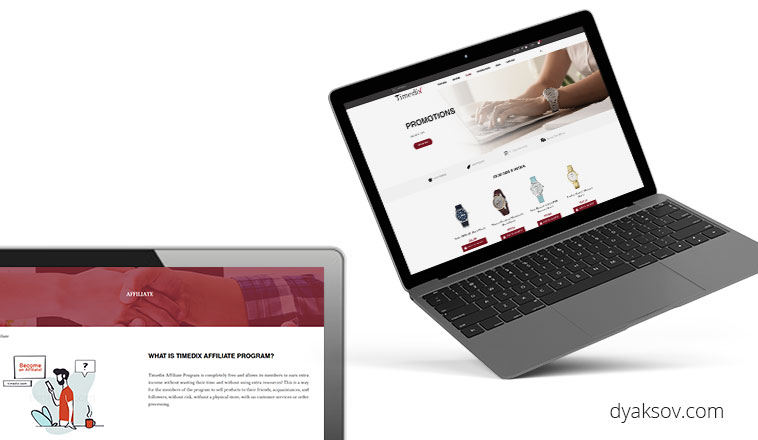
OpenCart is a ready-made open source platform that’s easy to integrate and customize. That saves us a lot of money we would otherwise pay developers to build a site from scratch. Being ready-made doesn’t mean everything in it is free, though. It definitely isn’t, but it does keep things as simple as possible. That’s how we built our site’s structure. We created pages, product categories, individual products, terms of use, an About Us page and a privacy policy, because without these you simply can’t take orders.
We chose a modern, simple theme so every visitor could find what they were looking for quickly and the site would load fast. One of our main goals was for the site to look good and work well on mobile, because, as anyone who follows online retail knows, that’s now a key factor in how search engines index sites. Our designer also brightened up some of the key pages with beautiful illustrations.
We made the site bilingual, in Bulgarian and English, available at both timedix.bg and timedix.com, because we want to sell in other countries too. But before we “conquer” the world, we need to make a strong showing at home.
Before launching the store and letting the orders “pour in,” we had to test and fix lots of small bugs, work to make the user experience as good as possible and smooth out the rough edges. When a store runs in more than one language, changes take longer, and no matter how much you test, you can’t predict every situation. So it’s better to launch and adjust as you go, based on user feedback.
By the end of March, we were ready to sell, but the first orders weren’t coming in, which is normal. So what do you do? The answer was extremely simple, and it’s called digital marketing!
Marketing
Many young entrepreneurs starting their own business are afraid to spend money on advertising. For better or worse, the Bulgarian market keeps getting more competitive, and you can’t build traffic and make sales without paid ads (unless you have hundreds of thousands of followers). That’s why we set aside a big part of our budget specifically for winning new customers.
But how do you get started with digital marketing? My advice is to bring in a specialist. Even if you plan to carry out the strategy yourself and have experience running ads and managing social media, you need to be consistent and follow certain rules. So if you want to save on this cost, at least invest in a solid strategy and a clear set of steps to follow.
Of course, if you can afford to hire someone, that’s far better, because then you can focus on improving your store and your customer service, which is one of the best long-term investments you can make. Luckily, my team and I have the experience, so we skipped the step of finding a specialist or agency. Just hitting the “Boost” button on a Facebook post would only have given us the illusion that we were doing serious online advertising.
We set each month’s marketing budget based on the previous month’s revenue. For the first few months, we used a fixed budget, because we knew revenue would be slow to come in.
Here’s our strategy for a successful online store, point by point:
1. Running social media profiles
2. Running ad campaigns
Can you guess which ads we started with? Facebook and Google Ads, of course. But as you may know, these networks offer a huge number of advertising options, so it’s easy to get lost, especially if all of this is new to you.
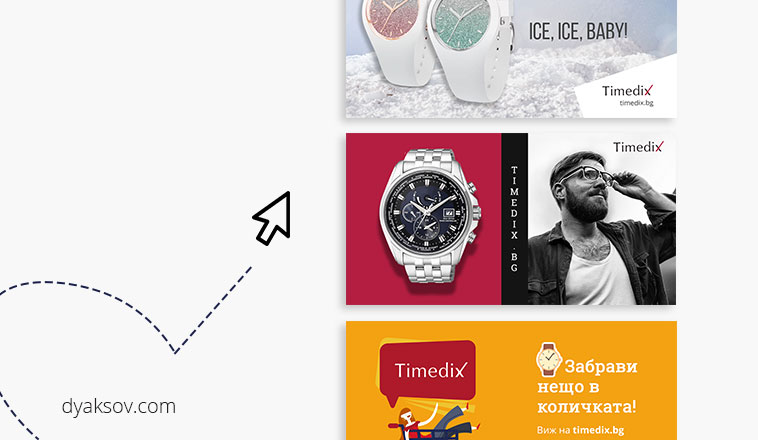
On Facebook, we ran website traffic campaigns, sales ads and, only at the very beginning, a few engagement ads for our posts until our brand-new page had at least some audience. After that, we kept going with traffic ads for our blog articles, sales ads, retargeting ads for past site visitors and dynamic product catalog ads.
In Google Ads, we focused mainly on search campaigns, but we also used display ads. Here I strongly recommend working with specialists, because otherwise there’s a good chance you’ll burn through your money without making a sale.
The main metrics we track in our ad campaigns are ROAS (return on ad spend) and conversion rate (the percentage of visitors who place an order). When paid ads perform well (especially on ROAS), we can raise ad budgets, which grows the store’s revenue. To my great regret, both metrics turned out to be much lower for brand-name watches than for similar categories such as clothing, shoes and cosmetics.
3. Content marketing
Content marketing is extremely useful and effective as part of a long-term strategy. The idea is to give people useful, interesting information related to your field. In our case, that means engaging articles about watches and accessories.
And that’s just the start of what content marketing can do. You can also write descriptions for products and product categories. They help shoppers by answering their questions in advance, and they help optimize your store for search engines.
4. SEO
Maybe the most important of all: SEO!
If you want a successful website, whether it’s an online store, a personal site or anything else online, this is truly one of the most important things to focus on. Yes, results come more slowly than with paid ads, but SEO brings you organic traffic, you don’t pay any network for the visits, and people trust it far more.
We knew from the start that we wouldn’t get organic traffic from Google in the first few months. But we built a strategy that covered optimizing the store and its metadata, creating content, spreading the word about the brand, influencer marketing and earning backlinks to the store through guest posts. And the results came quickly. We’re on the first page of Google.bg for “watches” (No. 3 as of March 31, 2019), “brand-name watches,” “original watches” and other keywords. This channel now brings us steady traffic and steady sales.

5. Email marketing and browser notifications
When you buy a perfume and use it often, sooner or later it runs out. That doesn’t happen with watches, so we don’t send email campaigns often, but we do use them at the right moments. We email customers to wish them a happy holiday (such as their name day, a popular Bulgarian tradition of celebrating the saint’s day linked to your name), to ask for feedback on a product they bought and to announce a big sale or another campaign on our site.
To be clear, I’m not talking about mass email newsletters. GDPR took effect in May 2018, and now we can use mass email in a much more limited way, and only with people who have signed up voluntarily. We do, however, use browser notifications for visitors who have opted in to them. They work especially well for campaigns like Black Friday.
6. Black Friday campaigns
7. Price comparison and deal platforms
When you sell brand-name goods that other retailers also carry, it’s a good idea to list your products on price and product comparison sites such as pazaruvaj.com, shopmania.bg and others. When your prices are lower than (or close to) your competitors’, show off that advantage on sites like these, especially when you’re just starting out. That’s where our first sales came from.
Takeaways
I’ve walked you through the steps I took to build a profitable online store that reached a six-figure turnover in Bulgarian leva in less than a year.
But here’s the real secret:
Invest in the store itself! Instead of a fixed monthly budget, my partner and I decided to reinvest a percentage of each month’s revenue. So the more we sell, the more we invest. We set goals and work to hit them. And last but not least, we never stop developing our online business. Only a year in, we’ve already done a partial redesign, we keep adding new features, and we’ve translated most of the store into Greek so we can start selling next summer in our southern neighbor, Greece, our next potential market.
Still, starting or growing an online business is not easy. It takes a lot of effort and persistence. The days when you could launch an online store with no upfront investment are long gone. But with the right strategy, a well-thought-out business model, persistence and dedication, success is entirely within reach.
I’m curious: are you planning to start your own online store, or do you already have one? If so, what niche did you choose? I’d love to hear about it, and if you need help, get in touch. I’ll gladly give you some pointers to help you put your plan into action.
Petar Dyaksov
Entrepreneur and founder of a digital agency, in e-commerce since 2009. He grows online businesses such as Fragrances.bg and Timedix and shares his experience as a speaker, moderator and mentor at nearly 80 conferences and trainings.
More about me